Golf Club Face Grooves and What They Mean for Your Shots
Golf club face grooves help manage contact through grass and moisture. Learn what to compare on a wedge and how to choose a club for your usual lies.
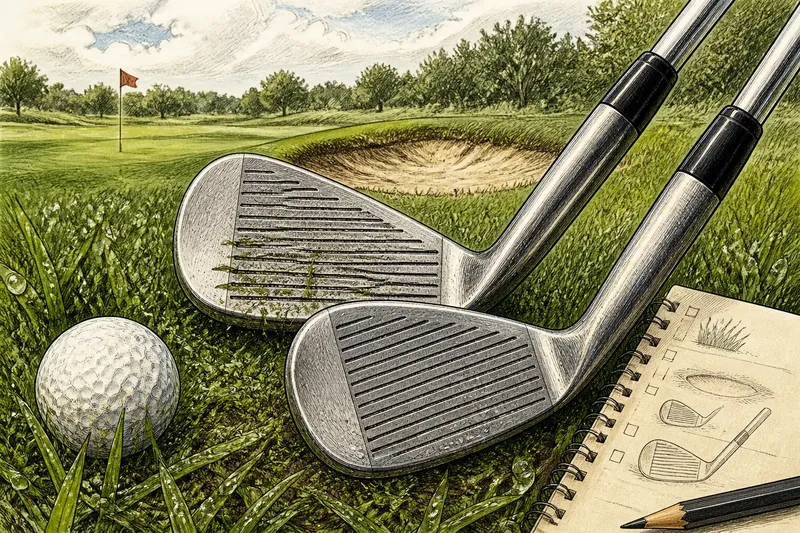
Golf club face grooves are designed to help manage contact when grass or moisture gets between the ball and the face. They can influence how the face interacts with the ball, but they do not dictate launch or promise a particular amount of spin.
That distinction helps when choosing a wedge or making sense of a shot. The strike, lie, loft and club delivery all matter, so compare groove design as one part of the club rather than as a shortcut to control.
What do golf club face grooves do at impact?
Grooves are channels cut across the club face; the flat areas between them are called lands. On a clean strike, the ball meets the lands and the face’s surface texture. The grooves are only part of that contact.
Grass and moisture can interfere with contact. The channels give some of that material room to move as the ball meets the face, which may help the face maintain useful contact in those conditions. How much that matters depends on the lie and the strike.
Grooves do not scoop the ball into the air. Loft and the way the club is delivered shape launch, while strike location and face condition affect contact. A ball struck from dry turf can respond differently from one caught through damp grass with the same club.
How do groove designs differ?
Grooves vary in width, depth, spacing and edge shape. Designers balance the channels with the flat lands between them, and the pattern is only one feature of the face. A wider-looking groove is not, by itself, evidence that a club will produce more spin or suit every golfer.
Irons and wedges are used across varied lies, while a driver is designed for a different kind of shot. Face texture, loft, sole shape, shaft and the club’s overall design also affect whether it suits your game. Compare the whole club rather than ranking it by how dramatic the grooves look.
- Wider-looking pattern: If you often play from grass or damp lies, consider whether the club is intended for those conditions; if the rest of the design does not suit your shots, compare another option.
- Finer-looking pattern: If the club fits your intended use and feels right, a less prominent pattern need not rule it out; if you are unsure about its design or competition status, ask the maker or a club professional.
How should you choose a wedge for your usual lies?
Start with where you play the club. A wedge used for pitches from grass has a different job from one used mainly for bunker shots or full swings. Consider the sole and loft alongside the face, and check how the club fits with the rest of your set.
If you are learning to strike the ball consistently, focus on suitable fit and centre contact rather than expecting grooves to correct a poor strike. For a club you already own, inspect the face for damage or wear, then consider whether it still serves the shots you need. If you play organised competition, check the current equipment rules or ask a qualified club professional about conformity.
Say you are choosing between two wedges for a course where the grass is often damp in the morning. Imagine, as an invented comparison, that both clubs have suitable lofts and grips, but one has a sole that feels awkward on your usual turf while the other sits comfortably. First, check each face for damage and note the groove patterns. Next, compare the soles against the lies you commonly play and confirm that the lofts fit your set. Then try similar shots from comparable lies, if you have access to a suitable practice area. If the awkward sole keeps catching the turf, favour the club that sits and moves more comfortably; if neither gives you a clear preference, compare fit and rules status before deciding. The observable result is a reasoned choice between those two clubs, not proof that either groove pattern produces a fixed shot.
What should you check before choosing a grooved club?
Use this list to connect each observation to a decision:
- Usual lies: Note whether your shots mostly come from fairway, rough, sand or damp grass. If one kind of lie dominates, prioritise a club suited to it; if your lies vary, compare clubs across the different shots you play.
- Club’s job: Identify whether you need pitches, bunker shots, full swings or a mix. If one job matters most, choose around it; if the club must do several jobs, look for a design you can use comfortably across them.
- Loft and set gaps: Check where the club sits among your other clubs. If the loft leaves an awkward gap for your intended shots, consider a different loft; if the set fits your needs, move on to sole and feel.
- Face condition: Look for visible damage, heavy dirt or worn areas. If the face is dirty, clean it before judging contact; if it is damaged or wear concerns you, ask a club professional to inspect it.
- Fit and feel: Notice the length, weight, grip and how the sole meets the ground. If any part feels unsuitable, compare another club or seek fitting advice; if the club feels comfortable, assess it against your intended shots.
- Competition rules: Check the applicable equipment rules if you play in organised events. If conformity is unclear, consult the governing body’s current guidance or a qualified club professional; if the club is not permitted, choose a conforming alternative for that event.
Do golf club face grooves settle these questions?
Do wider grooves always produce more spin?
No. Groove width alone does not settle how much spin a shot will have. Strike, lie, face condition, loft and delivery all affect the result.
Do grooves lift the ball into the air?
No. Loft and the way you deliver the club shape launch. Grooves are part of the contact surface, not a scoop.
Do grooves matter more from wet grass?
They may matter more when moisture or grass interferes with contact, because the channels are designed to help manage those materials. That does not make a particular shot’s flight predictable.
Can worn grooves make a club unusable?
Wear alone does not settle whether a club suits your game or is allowed in an event. Inspect the face, consider how the club serves your needs and check the applicable rules if competition conformity matters.
What is not worth worrying about?
It is not worth choosing a club solely because its grooves look sharp or deep. Appearance does not promise extra stopping power, and a subtler pattern is not proof of poor design. A single shot is not a reliable verdict either: contact and conditions can vary from one swing to the next.
For a useful golf club face grooves comparison, start with the lies you play and the job the club must do. Then weigh groove design alongside loft, sole, fit and rules status. A clear view of those details makes the choice more grounded without turning a face feature into a promise about the next shot.