Why the Modern Olympic Pentathlon Changed Its Events
Why the modern Olympic pentathlon changed its events, and how its current mix reshapes the contest’s demands, spectator experience and event balance.
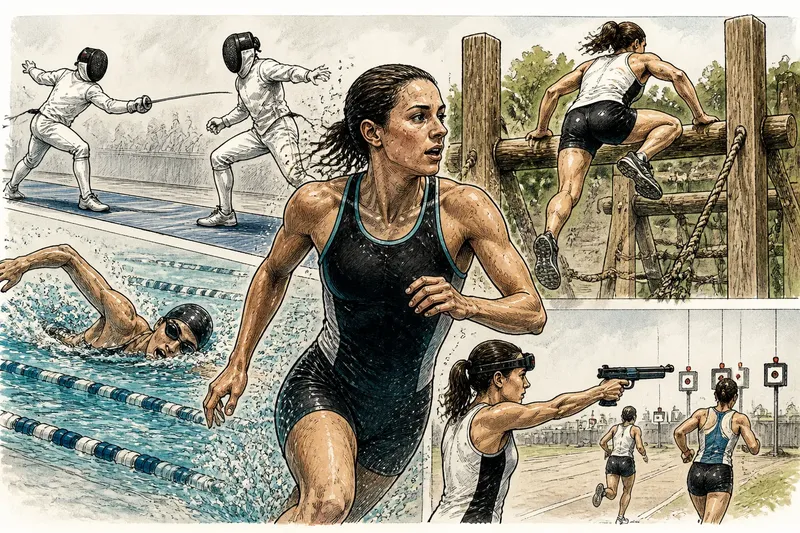
The modern Olympic pentathlon’s event changes altered what athletes must do and what spectators can see. The modern Olympic pentathlon began with fencing, swimming, show jumping, pistol shooting and running; its current programme uses fencing, obstacle racing, swimming and laser run.
What did the original modern pentathlon test?
The original programme paired five different disciplines: fencing, swimming, equestrian show jumping, pistol shooting and cross-country running. The event was associated with an imagined military messenger’s journey, but that story should be understood as a sporting idea rather than a record of a specific exercise.
Each discipline demanded a different approach. Fencing required tactical decisions, swimming and running tested physical capacity, shooting demanded control, and show jumping involved riding an unfamiliar horse. The result was a contest built around switching between unlike tasks rather than excelling at one alone.
How did the combined finish change the contest?
In the earlier format, running and shooting were separate events. They were later combined into the laser run, in which athletes alternate running and laser-pistol shooting. The start order is based on their standings from the preceding events, creating a pursuit-style finish.
This arrangement makes changes in position visible as athletes chase one another. It also makes shooting part of a repeated physical sequence: athletes must settle their aim after running before continuing. That changes the experience of the final event without removing its separate demands.
Why was horse riding replaced?
Horse riding left the programme after concerns about animal welfare and fairness, as well as the practical demands of staging the event. Athletes rode horses provided for them, so they had to adapt to an unfamiliar mount. That tested horsemanship, but also made the horse’s behaviour part of an athlete’s competition.
Obstacle racing replaced riding in the current programme. It shifts the challenge towards movement through a course and removes the need to provide horses. It does not reproduce the skill of riding, so the change is a redefinition of the pentathlon’s demands, not a direct substitute in athletic terms.
What does the current event mix reward?
The current programme combines fencing, swimming, obstacle racing and laser run. Together, these events ask athletes to shift between tactical judgement, swimming, course movement, running and shooting. The mix still tests versatility, but it defines that quality differently from the horse-riding format.
Say you are watching an athlete who has just finished swimming and is moving on to obstacle racing. You can compare the different tasks without knowing every scoring detail: swimming rewards efficient movement through water, while the obstacle course demands coordination and quick adjustments. In the laser run, the pursuit start lets you see how earlier results shape the final chase.
How can you judge a proposed event change?
Use a few practical questions to assess what a change would mean for the competition. Each observation points to a decision rather than assuming that tradition or spectacle should settle the issue.
- Check whether the new event adds a distinct skill; if it does, it may broaden the contest, but if it duplicates another event, compare alternatives that test a different ability.
- Check whether athletes can prepare for the event under comparable conditions; if they can, the change may support fair competition, but if access varies, consider a format that reduces that gap.
- Check whether the event can be staged safely for athletes and others involved; if the risks can be managed, assess the remaining trade-offs, but if they cannot, choose a safer format.
- Check whether suitable venues and equipment are available; if they are, the event may be practical to stage, but if not, consider a discipline that fits the available setting.
- Check whether spectators can follow how the event affects the standings; if they can, the contest is easier to read, but if not, clarify the format or consider a more legible structure.
- Check whether the change preserves meaningful contrasts between disciplines; if it does, it supports the pentathlon’s broad test, but if it makes the events too similar, reconsider the mix.
What do readers ask about modern pentathlon event changes?
Does the modern pentathlon still have five events?
Its name and format are based on a five-part contest, but the current programme groups some activities into combined events. The disciplines have changed over time, so the name does not mean that the original list remains in place.
What happens in laser run?
Athletes alternate running with laser-pistol shooting. Their starting order reflects results from earlier events, making the finish a pursuit rather than a fresh, simultaneous start.
Why did obstacle racing replace horse riding?
The change followed concerns about animal welfare, fairness and the practical demands of horse riding in the competition. Obstacle racing tests different abilities, so it changes the sport’s idea of versatility rather than copying the former discipline.
Could the event mix change again?
Formats can be reviewed, but a future change would need to be assessed on its own terms. Ask whether it adds a distinct skill, supports fair participation and fits the practical demands of staging the event.
What is not worth the effort when judging a change?
It is not useful to treat every revision as proof that the sport has either abandoned or preserved its purpose. Instead, compare what the old and new events ask athletes to do, how the format affects fairness, and whether spectators can understand the result.
The modern Olympic pentathlon’s event changes are easiest to follow as choices about the meaning of versatility. The current mix keeps contrasting demands in one competition, while replacing the specific skills and practical arrangements of the earlier programme. When another change is proposed, check what skill it adds, what it removes and how that affects the contest.